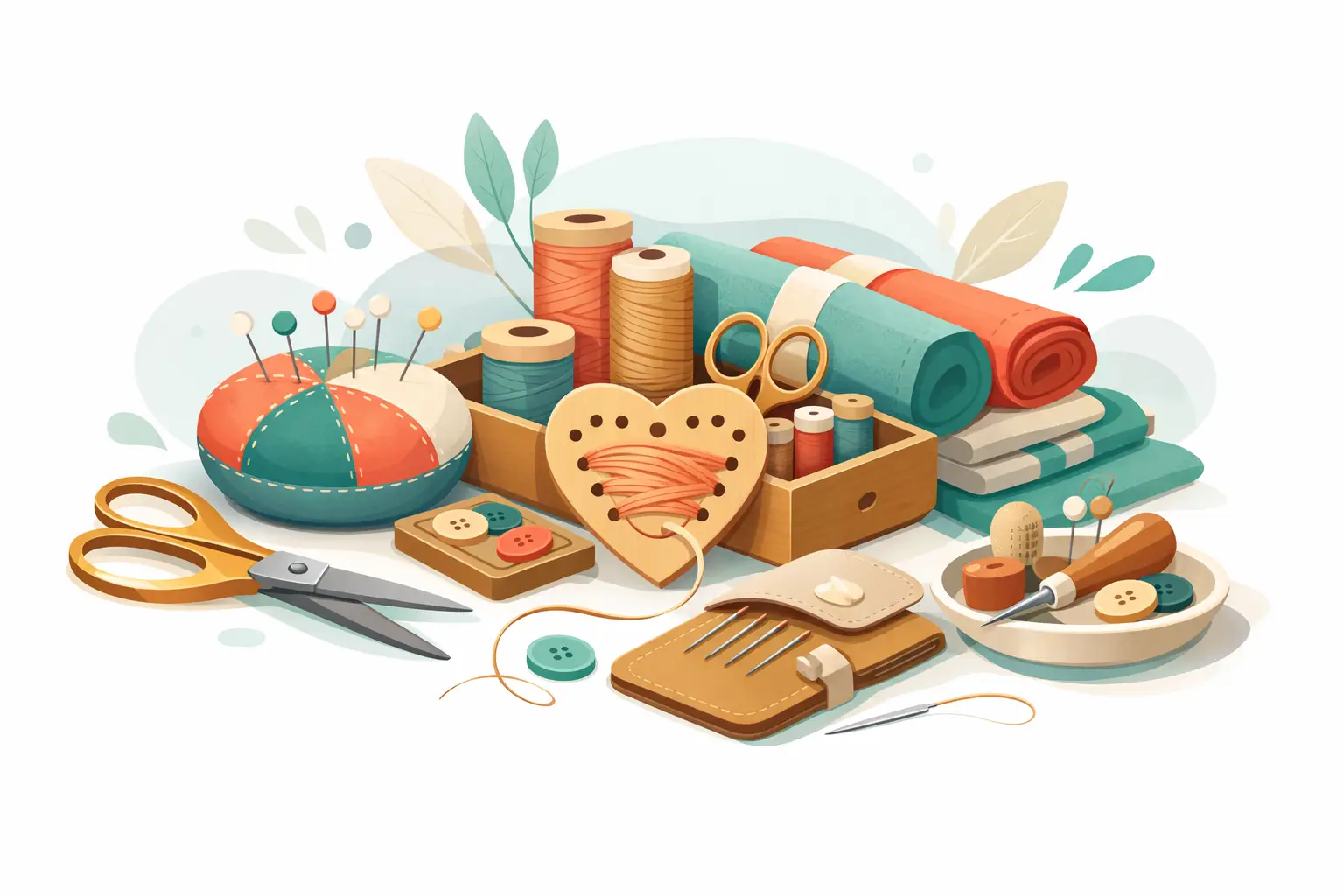
Some sewing tools do their job and disappear into the background. Others make you want to sit down, clear the table, and start a project just because they look good and feel right in your hands. That is the appeal of handmade sewing accessories. They are practical, yes, but they also bring personality to a craft that is already deeply personal.
If you sew for fun, sell your work, mend clothes, or shop for someone who always has thread clippings in their bag, the little tools matter. A pin cushion that actually fits your style, a fabric needle book that keeps things organized, or a well-made project pouch can change how your whole setup feels. The best ones are useful first, but they also carry that small-shop charm you simply do not get from generic craft aisle basics.
Why handmade sewing accessories stand out
Mass-produced notions usually aim for one thing – function at the lowest cost. Sometimes that is fine. A plain seam ripper is still a seam ripper. But when you buy handmade, you are usually getting more thought in the details: fabric choices, stitching quality, scale, color combinations, and finishing touches that make the item feel considered instead of rushed.
That difference shows up most in the things you use often. A handmade wrist pin cushion can be softer, better balanced, and more comfortable to wear through a long cutting session. A fabric organizer might include pockets sized for clips, snips, and marking tools because the maker actually sews and knows what tends to get lost. You are not just buying a category. You are buying someone’s experience with the craft.
There is also the visual side. Sewing spaces are rarely just workspaces. They are creative corners, dining tables turned studios, or shared rooms where every item needs to earn its place. Handmade accessories bring color and character without feeling cluttered. For shoppers who care about aesthetics as much as utility, that matters.
The best handmade sewing accessories are useful first
Pretty is great, but only if the item holds up. The most worthwhile accessories usually solve an everyday annoyance. Think about what gets misplaced, tangled, bent, or ignored in your current setup. That is where handmade pieces often shine.
Needle books are a good example. A handmade version made from sturdy cotton or linen can keep hand-sewing needles sorted and easy to spot. That sounds simple until you have spent ten minutes searching the bottom of a tin for the right size. The same goes for small zipper pouches for clips, elastic, labels, or embroidery scissors. A pouch is not groundbreaking, but a well-sized one can save real time.
Pin cushions, thread catchers, scissor sleeves, measuring tape holders, and compact tool rolls all fit into that same category. They are not flashy purchases, yet they make your routine smoother. And if they happen to match your taste, even better.
Handmade sewing accessories that also make great gifts
This category works especially well for gifting because sewing tools can be personal without being overly complicated. You do not need to know someone’s exact machine model or favorite pattern company to choose a beautiful pin cushion or notions pouch. That makes handmade accessories a safer gift than bigger equipment, while still feeling thoughtful.
The sweet spot is something practical with a little charm. A floral wrist pin cushion for a quilter, a minimalist neutral tool pouch for someone who hems their own wardrobe, or a fun fabric needle case for a friend just getting into mending all feel specific without being risky.
Giftability also comes from presentation. Handmade items often arrive looking like they were packed by a real person, not pulled from warehouse stock. For Etsy shoppers, that personal touch is part of the appeal. It feels more like giving something chosen than something ordered.
What to look for when shopping handmade sewing accessories
Photos can make almost anything look polished, so it helps to know what actually matters. Start with materials. Cotton, canvas, linen, felt, cork fabric, and quality interfacing usually hold shape better than thin novelty fabrics on their own. If an accessory needs structure, it should look structured in the photos.
Construction matters just as much. Check whether edges are neatly finished, stitching looks even, and closures seem durable. A project bag with a weak zipper or a needle book with flimsy pages may still look cute at first, but it will not stay useful for long.
Size is another point people often skip. Handmade items can vary more than factory-made ones, which is part of the charm, but dimensions still matter. A pouch meant for hand-sewing supplies may not work for full-size shears. A pin cushion that looks plush in photos might be smaller than expected. Good listings make this clear.
It also helps to think about how the accessory will be used. If someone sews mostly on the go, compact and portable beats decorative. If they have a dedicated craft room, something larger and more display-friendly may make more sense. There is no single best choice. It depends on whether the accessory is meant to travel, organize, decorate, or all three.
Style matters more than people admit
Sewing is practical, but it is also emotional. People pick fabric because they love the print. They save buttons for years because they might be perfect someday. They arrange thread by color even when nobody else will see it. So yes, style matters.
That is one reason handmade sewing accessories have such strong appeal on Etsy. They let shoppers find pieces that fit their own creative identity. Some want cottagecore florals, some want clean modern neutrals, some want playful prints that feel a little retro. The accessory may be small, but it still becomes part of the making experience.
A style match can even make you use the item more. An organizer you love looking at tends to stay on the table. A project pouch in a print that feels like you will probably get tossed in a drawer and forgotten. It sounds minor, but small frictions add up in craft routines.
Shopping small means getting more personality
One of the best things about buying from an independent maker is that the product usually reflects a point of view. You can feel when an item was designed by someone who cares about fabric combinations, proportions, and how people actually use it. That is hard to fake.
With a small shop, there is often more range too. You may find accessories made in limited fabric runs, seasonal prints, or niche styles that would never survive a mass-market product meeting. That is exactly what many shoppers want – something that does not look like everyone else’s.
If you enjoy browsing for items that feel a little more personal, shops like IsaThreads on Etsy speak to that kind of customer. The draw is not just the object itself. It is the sense that someone made a real design choice instead of choosing the safest possible option.
When handmade is worth the extra cost
Handmade usually costs more than basic retail, and that is reasonable to acknowledge. If you need a dozen emergency sewing kits for a classroom, handmade may not be the practical route. If you need one great organizer you will use every week, the math changes.
The extra cost tends to be worth it when the item gets repeated use, holds up well, or feels gift-worthy enough to replace a more disposable purchase. It is also worth it when you care about design and want your tools to feel less generic. Not every sewing accessory needs to be handmade, but the pieces you reach for constantly are often the best place to upgrade.
There is also value in buying from a real maker whose work you genuinely like. For many Etsy shoppers, that is part of the purchase, not separate from it. You are choosing originality, small-batch craft, and a more personal shopping experience. That may not matter to every buyer, but for the right customer, it matters a lot.
Handmade sewing accessories can make your space feel more like yours
A craft setup does not need to be elaborate to feel inspiring. Sometimes one or two thoughtful pieces are enough. A handmade pin cushion on the table, a pouch that keeps your favorite tools in one place, or a fabric organizer that actually makes sense for your routine can turn a scattered setup into one that feels intentional.
That is why these pieces keep finding an audience. They are useful, easy to gift, and full of character. If you are already the kind of shopper who prefers independent sellers over big-box sameness, sewing accessories are one of the easiest places to see the difference.
Choose the ones you will actually use, pick the style that makes you happy, and let your tools look as creative as the work you make with them.
Leave a Reply