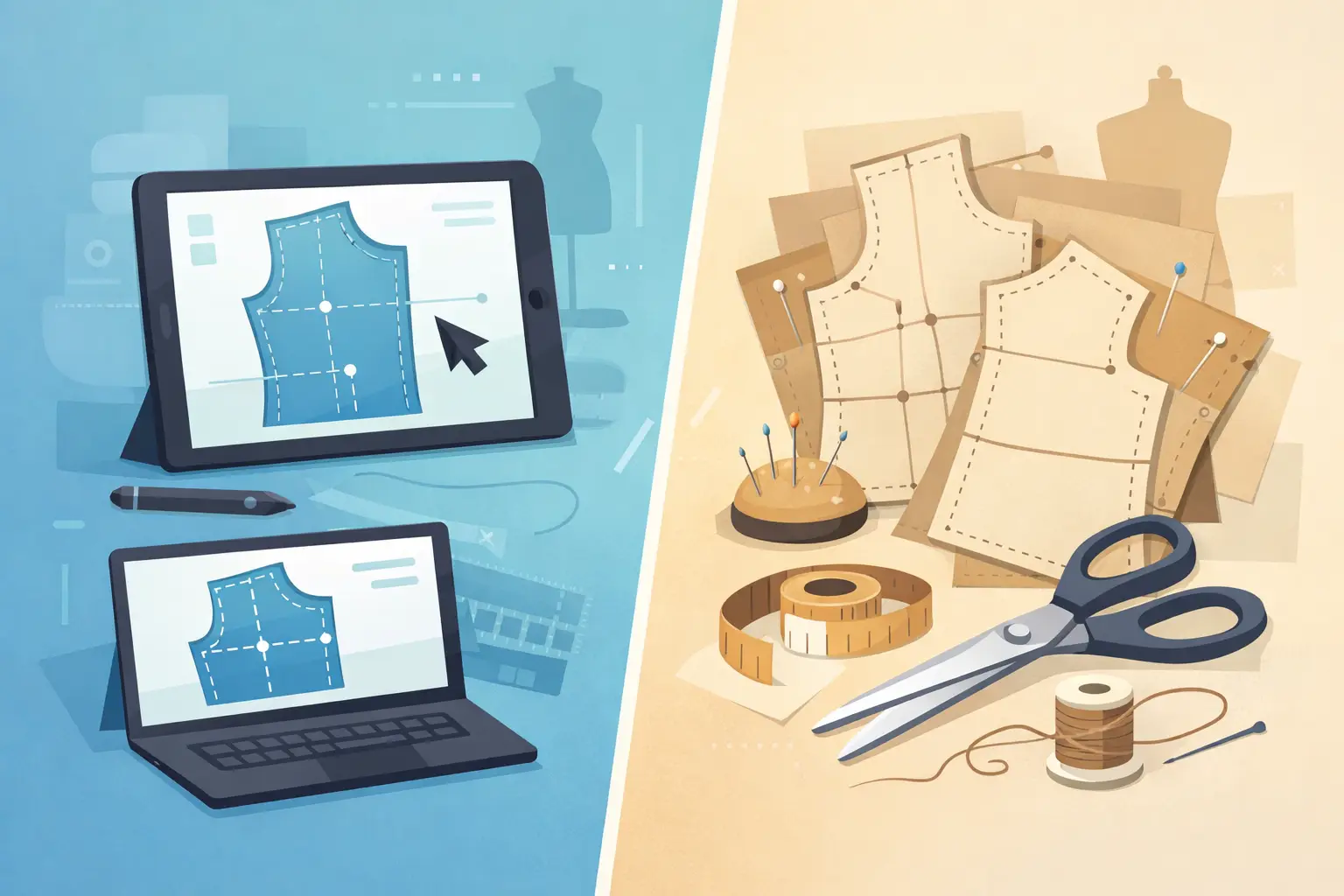
That moment when you find a pattern you love and then have to choose how you actually want to use it is more of a real sewing decision than people expect. Digital patterns vs paper patterns sounds simple on the surface, but the better option depends on how you sew, how much space you have, and how patient you are with prep work before the fun part starts.
Some sewists want a file they can buy at midnight, print in the morning, and reuse forever. Others want to open an envelope, unfold tissue, and get straight to cutting. Neither camp is wrong. The trick is knowing what fits your routine instead of assuming one format is automatically more modern, easier, or more professional.
Digital patterns vs paper patterns: the real difference
At the core, both formats can give you the exact same finished garment, bag, or project. The difference is less about the design itself and more about the experience of getting from purchase to first stitch.
Digital patterns are usually delivered as downloadable files. Depending on the designer, you may get a print-at-home version, a copy shop file, a projector file, or all three. That gives you flexibility, but it also means you are doing part of the setup yourself.
Paper patterns arrive physically printed and packaged. That might be classic tissue paper, sturdier printed sheets, or a booklet-style format from an indie designer. You are paying for convenience as much as for the pattern itself.
If your sewing time is limited, this difference matters. A pattern that saves you thirty minutes of taping or tracing can be worth the extra cost. On the other hand, if you like instant access and don’t mind a little prep, digital can feel like the smarter buy every time.
Why many makers love digital patterns
The biggest appeal of digital patterns is speed. You can see something you want to make, buy it, and have it in your inbox right away. There is no waiting for shipping and no risk of a sold-out size range in a physical format.
Digital also tends to be easier on storage. Instead of stacking envelopes in bins, drawers, or boxes, you can keep files organized on your laptop, tablet, or cloud storage. For anyone sewing in a small apartment, spare bedroom, or shared craft corner, that alone is a major advantage.
Then there is reusability. If a page gets torn, stained, or misplaced, you can print it again. If you want to cut one size for yourself and another for a gift, you still have the original file. That feels especially useful for frequently made basics like pajama pants, kids’ clothes, and simple tops.
Many digital patterns also include layered files. That means you can print only the size or sizes you need instead of sorting through a maze of overlapping lines. Not every designer offers this, but when they do, it makes a big difference.
The catch is that digital patterns are not always as instant in practice as they are in theory. You still need a printer, paper, ink, and enough patience to line everything up correctly if you are printing at home. Taping pages together is not hard, but it can be tedious, and some people genuinely hate it.
Where paper patterns still win
Paper patterns have a kind of straightforward charm that is hard to beat. You open the package, unfold the pieces, and start planning your fabric. For sewists who want a break from screens, passwords, and printer settings, paper feels refreshingly simple.
There is also a tactile side to it. Many people like being able to hold the pattern, pin the tissue, fold the envelope back up, and keep everything together in one place. It feels familiar and grounded, especially if sewing is your way to slow down.
Paper patterns can also be easier for beginners. You are not troubleshooting printer scale, wondering if your margins are off, or trying to tape fifty pages in perfect order. If your goal is just to sew, not manage a mini office-supply project first, paper has obvious appeal.
Another plus is presentation. A nicely packaged paper pattern feels giftable in a way a download usually does not. If you are buying for a creative friend, paper often feels more thoughtful and complete right out of the gate.
The downside is bulk. Paper takes up room, and pattern collections grow faster than most people expect. Tissue can tear. Envelopes can split. If a piece goes missing, replacing it is not always easy.
Cost matters more than people admit
When people compare digital patterns vs paper patterns, price usually enters the conversation pretty fast. Digital patterns are often cheaper upfront because there is no printing, packaging, or shipping built into the list price.
That lower sticker price is real, but it is not the whole story. Home printing uses paper and ink, and if you send large-format files to a copy shop, the total can climb quickly. If you print every digital pattern full size without thinking about it, the savings may end up smaller than expected.
Paper patterns cost more at checkout, but they can save time and reduce setup frustration. For some sewists, that trade-off is worth every dollar. It depends on whether you are budget-sensitive, time-sensitive, or just trying to avoid one more errand.
A practical way to think about it is this: if you sew often and reprint selectively, digital tends to be cost-effective. If you sew occasionally and value convenience, paper may feel like the better buy.
Ease of use depends on your sewing habits
This is where the choice gets personal. A sewist with a projector setup, a reliable printer, and a system for storing files will probably find digital patterns incredibly efficient. A sewist who likes a quiet table, a cup of coffee, and no tech interruptions may lean toward paper every single time.
Tracing habits matter too. If you trace all your patterns before cutting, the format matters less because you are not cutting into the original anyway. If you cut directly and move on, digital gives you a built-in backup while paper can feel more one-and-done unless you trace first.
Your workspace matters as well. Taping digital pages needs surface area. Large paper sheets need surface area too, but in a different way. If your cutting table is tiny, either option may come with some compromise.
And then there is your tolerance for prep. Some makers genuinely enjoy assembling digital files because it feels organized and methodical. Others would rather hem a slippery bias skirt than tape one more page. Knowing which person you are saves a lot of frustration.
Which one is better for beginners?
If you are brand new to sewing, paper patterns often feel more approachable. There are fewer setup steps between buying and sewing, which can lower the chance of early overwhelm. When you are already learning fabric types, seam allowances, grainlines, and fit, simplifying the pattern format can help.
That said, beginner-friendly digital patterns do exist, especially from indie designers who include clear instructions, layered sizes, and well-labeled files. If you are comfortable printing at home and following directions closely, digital is absolutely manageable.
A lot comes down to what kind of beginner you are. If you like tech, organizing files, and reading instructions carefully, digital might suit you right away. If you want the easiest possible path to your first finished project, paper may feel less intimidating.
The best choice is the one you will actually use
There is no prize for choosing the format that sounds smartest online. The best pattern is the one that gets cut, sewn, worn, and loved instead of sitting untouched because the setup annoyed you.
If you love convenience, quick access, and a clutter-free craft space, digital patterns are probably your friend. If you love tactile tools, low-tech sewing sessions, and ready-to-go packaging, paper patterns are still a great fit. Plenty of sewists use both, depending on the project.
That mixed approach is honestly the sweet spot for a lot of makers. You might prefer digital for everyday basics and trendy impulse makes, then choose paper for special projects, gifts, or patterns you know you will keep coming back to.
A creative business like IsaThreads lives in that same practical-but-personal space. People do not just want options. They want the option that feels easy, enjoyable, and right for the way they actually make things.
So if you are stuck between digital and paper, skip the idea that one format is the “correct” answer. Pick the one that fits your pace, your space, and your sewing mood right now – and let the project be the star.
Leave a Reply